Becket-Chimney Corners YMCA's
Berkshire Outdoor Center
413.623.8991
Outdoor Education
Our Programs Our Accommodation Our Meal Services Our Facilities Our Prices Paperwork Employment
What is a Ropes Course? What Are The Various Types of Ropes Courses?

A ropes course is an engineered set of structures that are designed to present challenges to individuals or groups. Ropes course structures may include low elements - those that take place on the ground, or high elements - usually constructed in trees or upon utility poles. Ropes course activities follow the fundamental philosophy of Experiential Education.

Ropes courses evolved out of obstacle courses usually used in military settings. These military obstacle courses are targeted at physically-fit adults, while contemporary ropes courses are used by people of all shapes, sizes and abilities. Modern ropes courses consist of sophisticated elements that have been designed with safety as paramount.

Typically, low elements (those taking place on the ground) are structures used by groups to develop group dynamics, communication and leadership skills, and high elements (those taking place atop utility poles or in trees) are structures used by individuals to develop self-confidence, self-esteem and to learn to overcome personal challenges, fears and obstacles.

High ropes course elements use complex belay systems, relying on ropes, harnesses, friction devices, carabiners and helmets. High ropes can be further described as being static or dynamic. Static ropes courses involve participants being secured (or secruing themselves) to an upper wire. Dynamic ropes courses involve participants being harnessed and connected to a rope that is belayed from a facilitator on the ground. Dynamic ropes courses can be considered safer, as once the participant is tied in, they remain tied in until the end of their participation. (All Berkshire Outdoor Center high ropes courses are dynamic (belayed) courses.)

Ropes courses are also known as challenge courses.


How Are Ropes Courses Used?

The ropes course structures are used as tools to present a specific problem to an individual or group to overcome. When presented with the problem, the individual or group must follow specific rules (safety rules and rules of the challenge) to overcome the problem. The problem can usually not be solved without collaboration.

Ropes course activities are run by a facilitator. The facilitator is trained in the safety management aspect of the ropes course, and has experience with typical responses and outcomes from the participants. The facilitator also manages a debrief session at the end of each activity.

Ropes course activities are designed to help participants (as individuals and as groups) enhance:

  • Cooperation - Many of the activities on the ropes course cannot be completed without cooperation from all group members.
  • Self-Esteem, Self-Confidence - High ropes course activities are more achievable than many participants think. Confronting fears and anxieties and then beating them boosts self-esteem and self-confidence.
  • Trust, Trustworthiness - Participants must have faith in one another to assist them in many ropes course elements.
  • Safe Risk-Taking - Participants are encouraged to move beyond their comfort zone in a safe environment. Risks are perceived, rather than actual.
  • Decision-Making - There are usually a number of sensible suggestions from participants as to how to achieve the task at hand. The group together must decide on which path to follow.
  • Teamwork (see Teambuilding) - including communication, sharing, persuading, participating, sharing, leading, following, respecting, understanding, encouraging.

What are Some Examples of Ropes Course Elements?

Use a sense of imagination when you read through the various examples of ropes course elements. Many of the attributes (such as nitroglycerin, spiders & whale watching boats) are imaginary.

Common low ropes course elements may include:

  • Whalewatch - A teetering board simulates a small boat in which participants must balance without hitting the rocks below. An impossible task without everyone being on the same page.
  • Nitro-Crossing - A swinging rope that is out of reach is the only means to get across the [perceived] ravine of nitroglycerin. Alternatively, participants could be carrying the nitroglycerin across the swing in a bucket. The element is complete when the entire group has crossed.
  • Spider's Web - Participants must together get everyone through the web without rattling it and disturbing the large sleeping spider. Two people cannot pass through the same hole in the web.

Common high ropes course elements may include:

  • Multi-Vine - Balancing on a tight-rope, participants must reach out from vine to vine for balance.
  • Elvis Walk - Participants must shuffle along two tight-ropes 20 feet off the ground - no hands. Makes you look like Elvis.
  • Giant's Ladder - The rungs start out far apart, the two participants naturally assume a competition race to the top. As they get higher, the rungs become further apart, and they realize (on their own) that the only way to the top is to help each other. Voluntary cooperation.

What sets Berkshire Outdoor Center Apart from its Competitors?

Comprehensive Ropes Course Facilities - The Berkshire Outdoor Center has very comprehensive ropes courses that include:

  • Two low ropes courses, each with over 15 elements. Ages 8+
  • Becket High Ropes Course - an elaborate 11 element course. Ages 12+
  • Chimney Corners High Ropes Course - a brand new, elaborate 15 element course. Ages 12+
  • Three climbing towers - including one indoor 25-feet high climbing wall with a viewing platform. Ages 8+
  • Chimney Corners Alpine Tower - a dramatic, 50' tall, self-supporting structure filled with challenging elements. Ages 12+
  • Becket Bouldering Room - An easy place to learn and practice bouldering skills. Ages 8+

Philosophy of Challenge By Choice - The Berkshire Outdoor Center follows the popular philosophy of Challenge By Choice. While participants are encouraged to participate in the activities, each participant chooses his or her own goals and challenges for the course. Participants are never coerced or required to participate. Participants choose their own level of participation - encouraged only to consider stepping outside their comfort zone. Facilitators assist in helping participants experience some level of success.

Tailorable Programs - We tailor our programs for every group that attends. Leadership Development packages include low and high ropes courses. Other Outdoor Education packages include teambuilding and low ropes courses. Any of our activities can be added to any of our packages. For example, a few schools that attend our fall programs love the high ropes courses focus, but like to add ecology (nature) and kayaking (adventure) to the activities for their students. Full Listing of Activities Offered by Berkshire Outdoor Center

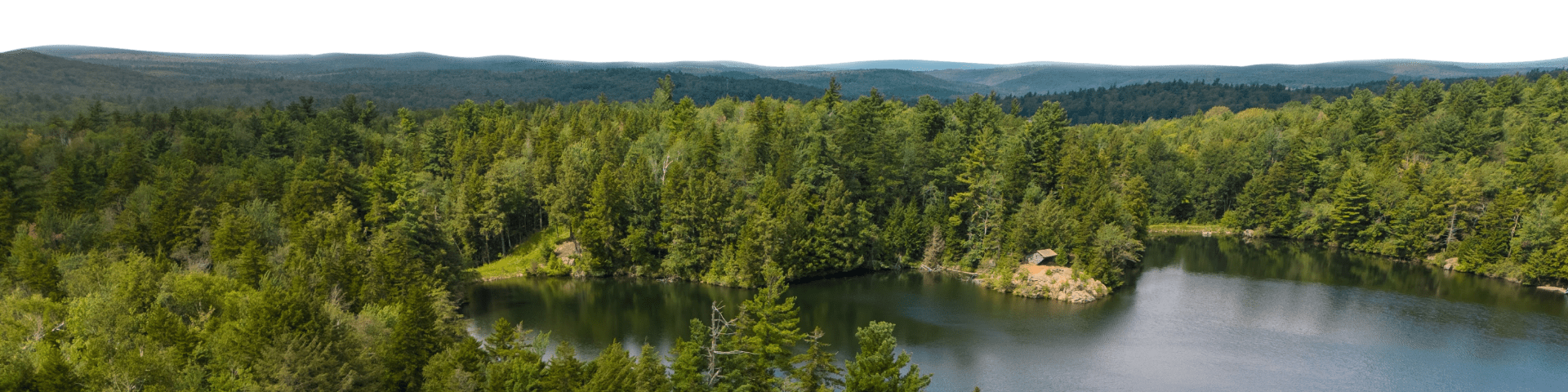
World-Class Facilities - The Berkshire Outdoor Center operates world-class facilities in a gorgeous rustic setting in the Berkshire Hills of Massachusetts.

  • Our ropes courses are state-of-the-art and are located on each of our two beautiful camps - Camp Becket and Chimney Corners.
  • Our brand new $5.5 million Chimney Corners Dining Hall is the perfect venue for meals and meeting spaces. One of our three climbing towers is even located inside this magnificent building!
  • Our rustic Camp Becket Dining Hall overlooks the beautiful Rudd Pond for simply gorgeous views.
  • We have three spectacular ponds, and we own all the land around each of them, so activities on the ponds are exclusively those of the Berkshire Outdoor Center.
  • Our camps are on 1,350 acres of forested conservation lands. The property includes an extensive wetlands system and even a pristine peat bog - the perfect venues for Environmental Education programs.
  • Our accommodation includes more than 70 rustic cabins arranged into 7 villages - with over 700 beds and four winterized lodges with up to 165 beds.

Exceptional International Staff - Our instructors are the best asset to our programs. A diverse range of staff from a variety of countries return year after year to run our Outdoor Education programs. The extensive cultural diversity and interesting perspective each of them brings to our organization and to our guests is truly an exceptional contribution to the programs. And our seasoned veterans are the best staff in their field, passionate about living and working here in the Berkshires.